

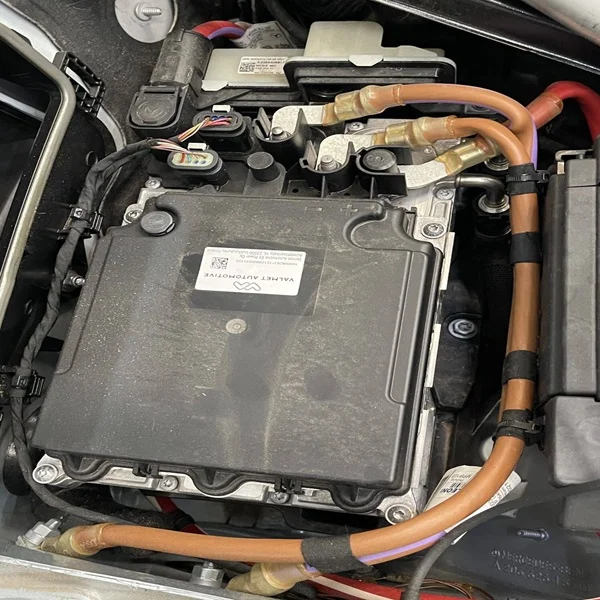
When a Mercedes hybrid warns of a battery fault, most owners assume the worst: a full replacement costing five figures. In many cases, that assumption is wrong. Modern diagnostic tools and module-level service techniques mean Mercedes hybrid battery repair is often a viable, far more affordable alternative to replacement. The key is understanding how these batteries fail, how a proper diagnosis works, and when repair makes sense versus when replacement is truly the right call.
How Mercedes Hybrid Batteries Are Built and How They Fail
Whether you drive a plug-in hybrid like the GLE 450e or an EQ Boost mild hybrid, your high-voltage battery is not a single unit. It is a pack of individual modules, each containing groups of lithium-ion cells, managed by a battery management system (BMS) that monitors voltage, temperature, and state of charge across the pack.
This architecture matters because hybrid batteries rarely fail all at once. Far more often, one or two modules degrade faster than the rest due to heat exposure, cell manufacturing variance, or simple age. When the voltage of a weak module drifts too far from its neighbors, the BMS flags a fault, limits hybrid function, and triggers a warning on the dash.
In other words, a “failed” battery is frequently a battery with a few failed components and that distinction is the foundation of Mercedes battery module repair.
Symptoms of a Failing Hybrid Battery
Hybrid battery problems rarely appear without warning; your Mercedes will usually signal trouble well before the pack fails outright. Recognizing these early indicators gives you the best chance of resolving the issue with a targeted repair rather than a full replacement.
Watch for these warning signs:
- Reduced Electric Range or Assist: A plug-in hybrid that once delivered 20+ miles of electric driving now manages half that, or the electric motor engages less frequently.
- Warning Messages: Alerts such as “Hybrid System Fault” or a red battery symbol, often accompanied by limp-home mode.
- Poor Fuel Economy: When the electric side underperforms, the gasoline engine works harder, and consumption climbs noticeably.
- Charging Problems: The vehicle refuses to charge fully, charges slowly, or stops charging unexpectedly.
- Frequent engine cycling. The combustion engine starts and stops more often than usual because the battery cannot hold adequate charge.
Any of these symptoms warrants prompt professional attention. Continuing to drive on a compromised pack can accelerate degradation in healthy modules and turn a repairable problem into a replacement scenario.
The Diagnostic Process: Where Trust Is Earned
Accurate high voltage battery repair starts with accurate diagnosis, and this is where specialized equipment and training separate a qualified shop from a guess.
A proper diagnostic workflow includes:
- Fault code retrieval using Mercedes XENTRY-level diagnostics, which reads BMS data far beyond what generic scanners can access.
- Module-level voltage analysis to identify which specific modules are underperforming and by how much.
- Cell balancing and capacity testing to determine whether a weak module can be recovered through rebalancing or must be physically replaced.
- Thermal and insulation checks to rule out cooling system issues or insulation faults that mimic battery failure.
This process typically takes a few hours and tells you exactly what you are dealing with; no assumptions, no unnecessary parts.
Repair vs Replacement: Making the Right Call
Once the diagnostic data is in hand, the repair-versus-replacement decision becomes a matter of facts rather than guesswork. The right choice depends on how many modules are affected, the overall health of the pack, and the long-term value of the vehicle.
Repair makes sense when:
- One to three modules are weak while the rest of the pack tests healthy
- The vehicle’s overall pack capacity remains above roughly 70–75%
- The fault stems from the BMS, wiring, connectors, or cooling system rather than the cells themselves
- The car is otherwise in good condition and worth keeping long term
Replacement makes sense when:
- Multiple modules show significant, uneven degradation across the pack
- The pack has suffered physical damage, flooding, or thermal events
- Overall capacity has dropped so far that repairing individual modules would only shift the failure point to the next-weakest module
- The vehicle is very high mileage and a refurbished or new pack better protects your investment
Cost Considerations
The cost gap between repair and replacement is significant. Full replacement pricing varies widely by model.
Repair is not always the cheaper option over the vehicle’s remaining life, which is why honest diagnostics matter. A trustworthy shop will show you the module data and walk you through the math for your specific car, not push you toward the most expensive fix.
Expert Mercedes Hybrid Battery Repair in Wayne, PA
High voltage battery repair is not a job for a general repair shop, it demands specialized training, insulated tooling, and manufacturer-level diagnostics. At Garttmeyer Automotive, our European vehicle specialists diagnose Mercedes hybrid battery issues at the module level, so you only pay for the repair your car actually needs. If your Mercedes is showing hybrid system warnings or losing electric range, contact us today to schedule a comprehensive hybrid battery diagnostic and get a straight answer before you spend a dollar on replacement.